Here’s something nobody puts in the job description: the people responsible for everyone else’s wellbeing are running on empty.
HR teams are the first call when payroll goes sideways, when a manager needs backup, when a new law drops, and when an employee is having the worst week of their life. They’re expected to be the calm in every storm.
Think about what lands on an HR desk in a single week. Onboarding. Open questions about benefits. A tricky employee relations issue. A compliance update that changes how you handle something you’ve done the same way for years. Then a few dozen “quick questions” that are never actually quick.
Now add a smaller team, a bigger workload, and the expectation to be strategic on top of it all. It adds up.
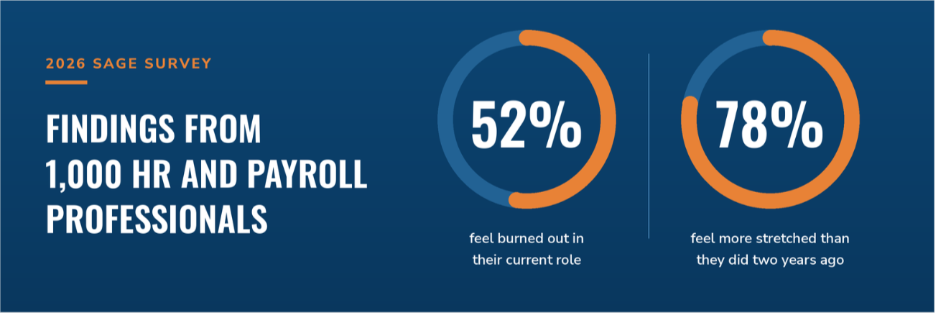
HR burnout doesn’t stay in the HR office. It shows up everywhere.
Response times slow down. Small issues slip through the cracks and turn into big ones. The proactive, people-first work, like checking in on a struggling team or catching a problem before it escalates, gets pushed to “when things calm down.”
The irony is hard to miss. The team built to take care of people has no bandwidth left to do the part of the job they love most: taking care of people.
When HR gets stretched thin, the instinct is often to add another portal, another inbox, or another automated system. Some of that helps with the routine stuff.
But HR isn’t a routine job. The hard moments, like a sensitive employee situation, a compliance gray area, or a decision that affects someone’s livelihood, need a real conversation with a real person who knows what they’re talking about.
Your HR team doesn’t need another ticket number. They need backup.
You can’t always make HR less demanding. But you can take a closer look at what is making the job harder than it needs to be. Start with the work itself. What keeps landing on the same person? What could be automated, delegated, or taken off their plate entirely?
Then look at how your team is working. A few practical places to start:
Burnout prevention is not about squeezing another wellness initiative onto an already full calendar. Sometimes the better answer is simply giving people the time, resources, and backup to do their jobs well.
Sometimes your team knows exactly what to do. Other times, they need another experienced HR professional to talk through a difficult employee situation, make sense of a new requirement, or simply help determine the best next step.
That is where our HR support comes in. Your team gets access to experienced HR guidance from people who take the time to understand your business and help you work through the situation, not just point you toward another portal or hand you a ticket number.
Because supporting your people is a lot easier when your HR team has people supporting them, too.
Reach out to see how our HR support can back up your team.